
Car Polishers
4.9from 1406 reviews across this range
Car polishers and buffing machines are what turn a swirled, dull paint job back into a deep gloss, and they've gone from a professional tool to something most enthusiasts own. We've been selling and using car buffers for over 15 years, so the range here is the machines we'd put in our own hands, from ShineMate and Rupes, with the spare parts, warranty and support to match. If you're not sure where to start, the picks below are the ones we recommend most.
 GuideLearn how to Cut & Polish your Car!Read the guide ›
Featured items & kits
Hand picked for this category 0% offBeginner Friendly
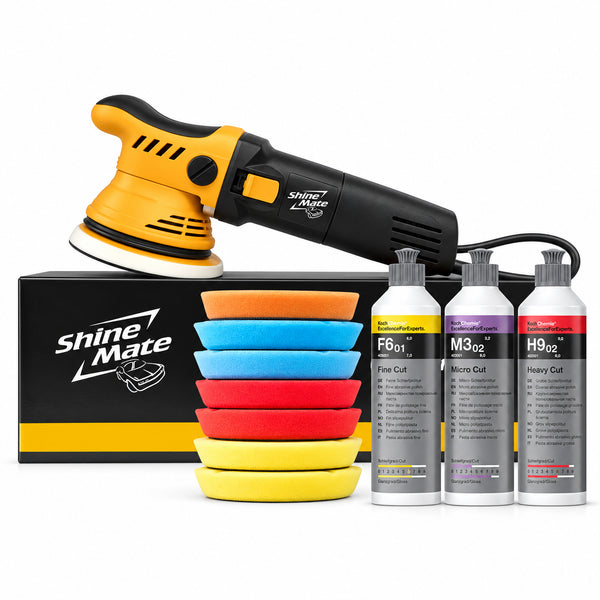 26.5% offBest Value
 0% offOur Pick
Shine MateEB351 5" 15mm | Cordless Dual Action Car Polisher
Rated 5.0 out of 5 stars
22 Reviews
From$692.95
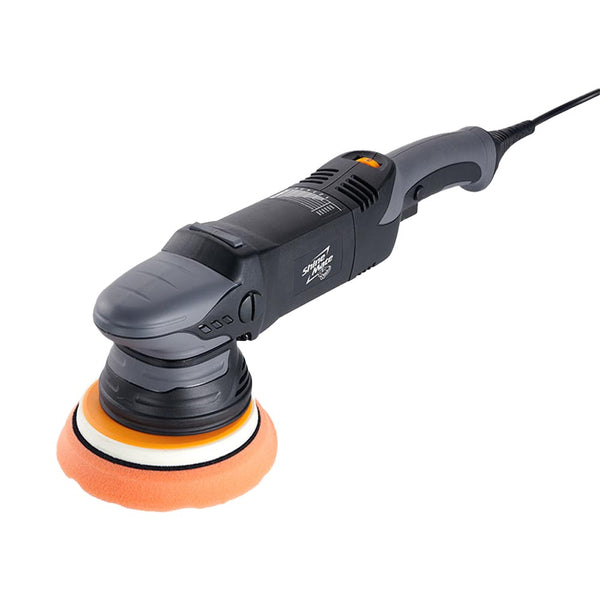 0% offPro's Choice
49 products

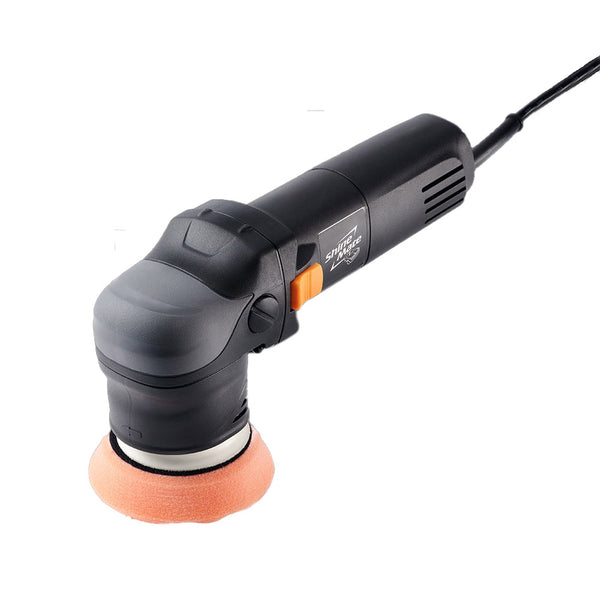 0% off
 8.5% off
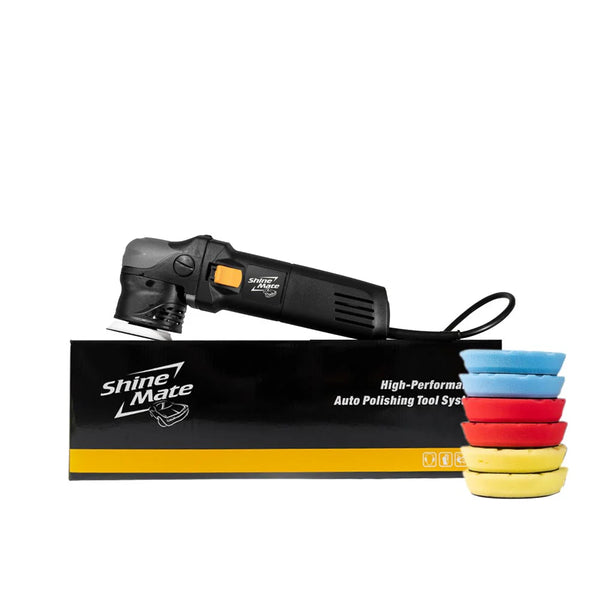
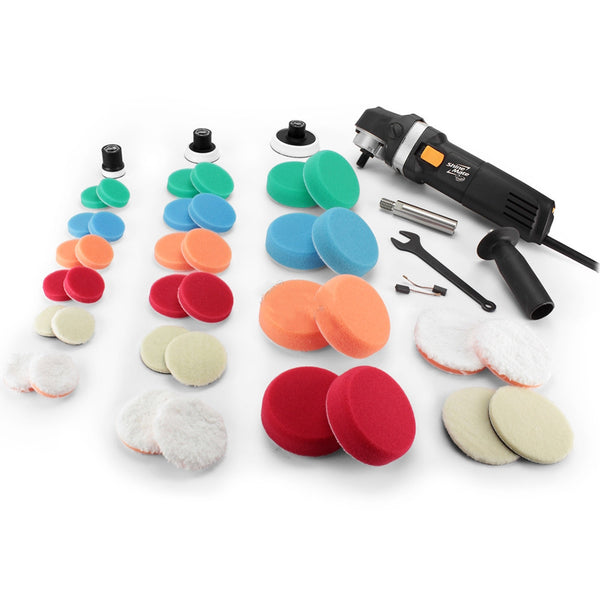
Shine MateEX603 3" 12mm | Mini Dual Action Car Polisher Kit
Rated 4.9 out of 5 stars
109 Reviews
$299.95
$327.65
26.5% off
 18.5% off
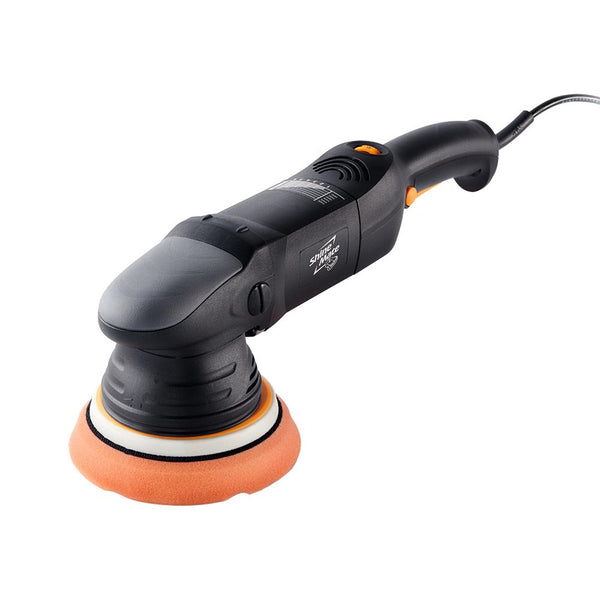
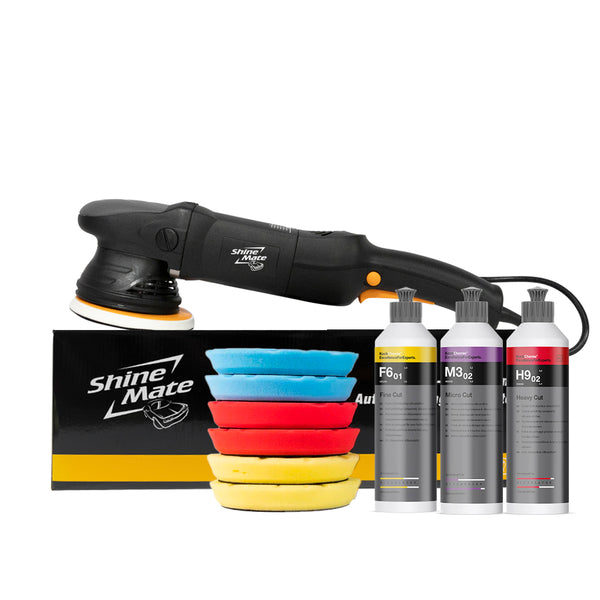
Shine MateEX610 5" 15mm | Dual Action Car Polisher Kit
Rated 4.8 out of 5 stars
111 Reviews
$399.95
$491.50
0% off
 19.5% off
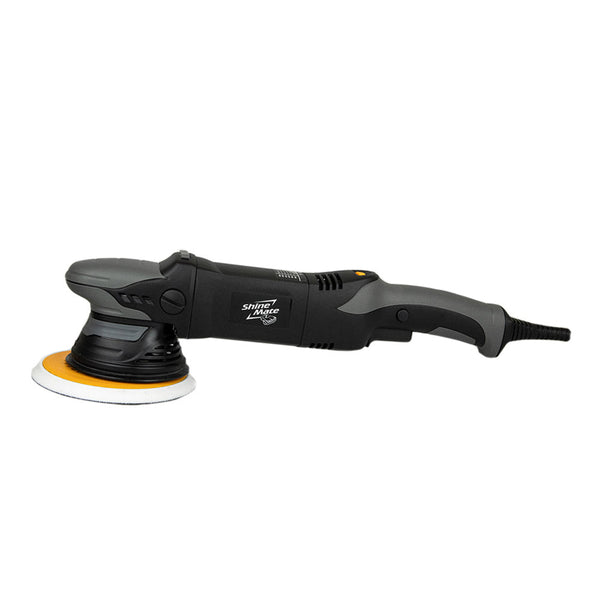
Shine MateEX620 5" 15mm | PRO Dual Action Car Polisher Kit
Rated 4.9 out of 5 stars
54 Reviews
$499.95
$620.50
 0% off
 19.5% off
Shine MateEX620 6" 21mm | PRO Dual Action Car Polisher Kit
Rated 4.9 out of 5 stars
54 Reviews
$529.95
$659.50

 22% off
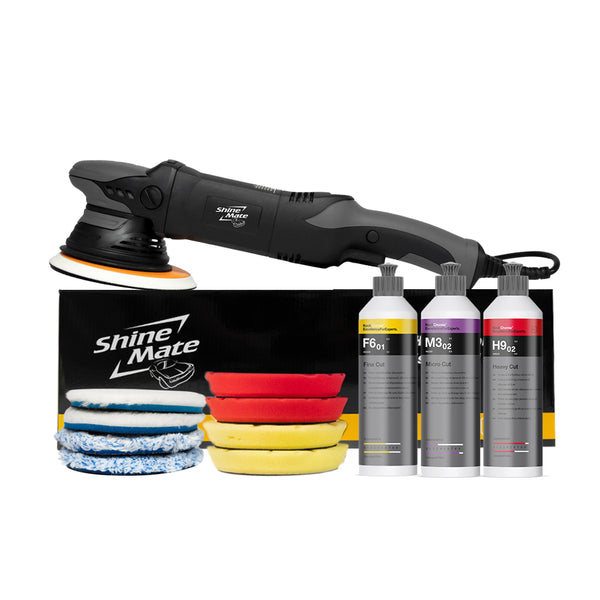
Shine MateWaxit Complete Corded Car Polisher Kit
Rated 5.0 out of 5 stars
2 Reviews
$1,099.95
$1,409.80
 16% off
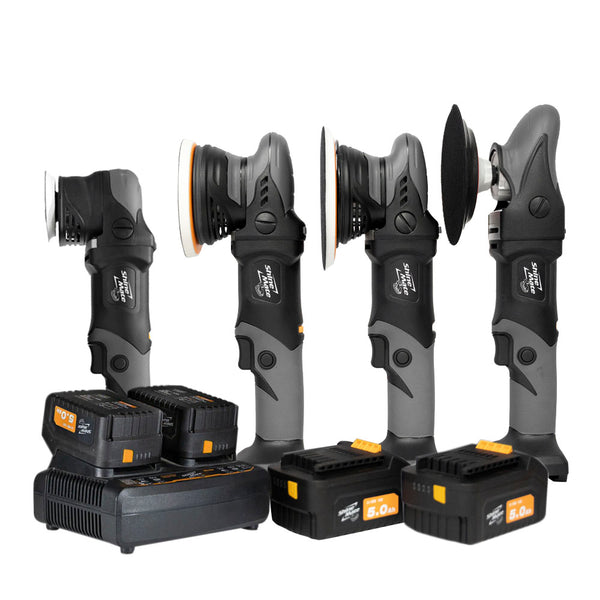
Shine MateWaxit Complete Cordless Car Polisher Kit
Rated 5.0 out of 5 stars
5 Reviews
$1,699.95
$2,019.50

 14.5% off
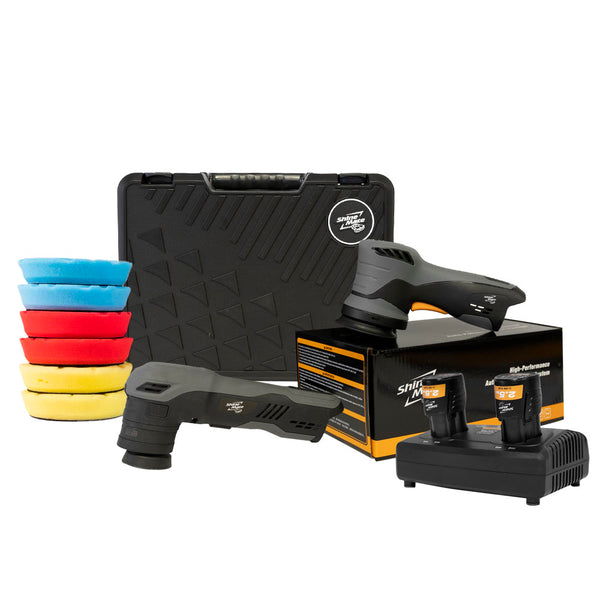
Shine MateMini Cordless Duo | EB210 & EB212 Car Polisher Kit
Rated 5.0 out of 5 stars
16 Reviews
$879.95
$1,027.60
 0% off
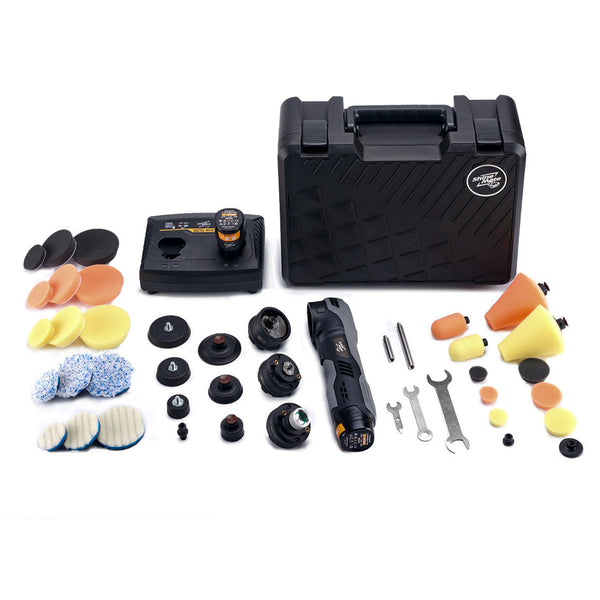
Shine MateEB210 | Mini Multi-Action Cordless Car Polisher Kit
Rated 5.0 out of 5 stars
16 Reviews
From$209.95
 0% off
Shine MateEB212 | Mini Dual Action Cordless Car Polisher Kit
Rated 5.0 out of 5 stars
7 Reviews
From$314.95



 0% off
Shine MateEB351 3" 12mm | Cordless Mini Dual Action Car Polisher
Rated 5.0 out of 5 stars
6 Reviews
From$241.45
 9.5% off
Shine MateEB351 3" 12mm | Mini Dual Action Cordless Car Polisher Kit
Rated 5.0 out of 5 stars
6 Reviews
$699.95
$773.50
In action
Car Polishers, in action
 FeaturedWaxit Enthusiast Car Polishing Kit
$359.95Shop ›
FeaturedWaxit Enthusiast Car Polishing Kit
$359.95Shop ›
 FeaturedShineMate ERO600 5" 9mm
$293.95Shop ›
FeaturedShineMate ERO600 5" 9mm
$293.95Shop ›


Car Polishers
FAQ's: Car Polishers
Which car polisher to buy, how to use it properly, and what pads and compounds go with it. These are the questions we get asked the most.
Still unsure? Ask us ›What type of car polisher is right for me?
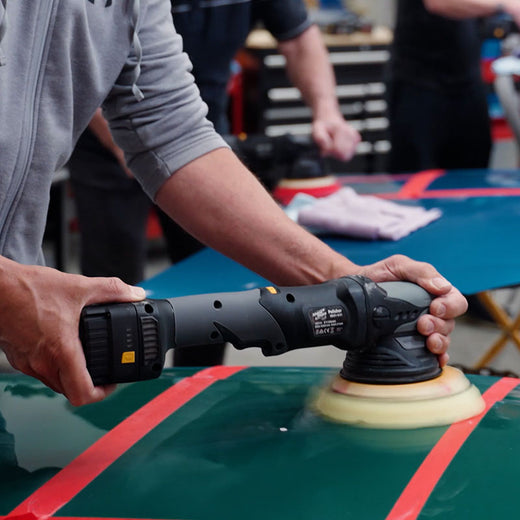
Start with a dual action polisher unless you've got a reason not to. A dual action spins and oscillates at the same time, which spreads the heat and makes it hard to damage paint even on your first go. It's what most enthusiasts own and what most detailers use for the bulk of their work.
Machines differ by backing plate size and throw, the distance the head orbits. A 5" plate with a 9mm to 15mm throw covers most cars and most jobs. A shorter 9mm throw like the ShineMate ERO600 is the easiest to control and the one we hand to most people starting out, and the longer 15mm and 21mm throws cover ground faster once you know what you're doing.
A rotary polisher spins on one axis, so it cuts faster and gets through heavy defects a DA won't, but it builds heat at the panel and can leave holograms if the pad sits. It's a second machine for someone who already knows how to polish, not a first one.
A mini polisher is a 1" to 3" version of either, for badges, mirrors, pillars and the spots a full size head can't reach. Worth having alongside a main machine, not instead of one.
Cordless versions exist for all three. Same machine, no lead, and the batteries now last a full car. If you polish away from a power point, or you're sick of the cord catching on the mirror, that's the one.
Machines differ by backing plate size and throw, the distance the head orbits. A 5" plate with a 9mm to 15mm throw covers most cars and most jobs. A shorter 9mm throw like the ShineMate ERO600 is the easiest to control and the one we hand to most people starting out, and the longer 15mm and 21mm throws cover ground faster once you know what you're doing.
A rotary polisher spins on one axis, so it cuts faster and gets through heavy defects a DA won't, but it builds heat at the panel and can leave holograms if the pad sits. It's a second machine for someone who already knows how to polish, not a first one.
A mini polisher is a 1" to 3" version of either, for badges, mirrors, pillars and the spots a full size head can't reach. Worth having alongside a main machine, not instead of one.
Cordless versions exist for all three. Same machine, no lead, and the batteries now last a full car. If you polish away from a power point, or you're sick of the cord catching on the mirror, that's the one.
How do I use my car polisher?
Decontaminate first. Polishing over bonded iron or tar drags it across the paint, so the car gets washed, clayed and iron removed before the polisher comes out. Our decontamination range covers that step.
Then the short version. Pick the least aggressive pad and compound that'll do the job and test a section before you commit. Centre the pad on the backing plate. Prime a fresh pad with four to six pea sized drops, then three or four each set after. Spread on low speed, work at speed 4 to 6 for cutting and 3 to 4 for finishing. Stay in a 40 to 60cm square, pass vertically then horizontally, and call that one pass. Three or four passes, wipe with a microfibre cloth, then check it under a detailing light.
Let the car polisher do the work. Light to medium pressure is the most you should ever need, and if you want more cut, change the pad or the compound rather than leaning harder. Leaning on the machine slows the head, hurts the finish and wears it out faster.
The full walkthrough with video is in our cut and polish guide.
Then the short version. Pick the least aggressive pad and compound that'll do the job and test a section before you commit. Centre the pad on the backing plate. Prime a fresh pad with four to six pea sized drops, then three or four each set after. Spread on low speed, work at speed 4 to 6 for cutting and 3 to 4 for finishing. Stay in a 40 to 60cm square, pass vertically then horizontally, and call that one pass. Three or four passes, wipe with a microfibre cloth, then check it under a detailing light.
Let the car polisher do the work. Light to medium pressure is the most you should ever need, and if you want more cut, change the pad or the compound rather than leaning harder. Leaning on the machine slows the head, hurts the finish and wears it out faster.
The full walkthrough with video is in our cut and polish guide.
What compounds and pads should I use with my machine polisher?
Three things decide it: how hard the paint is, how bad the defects are, and what pad you pair the compound with.
Paint hardness. Broadly, Japanese and Korean paint is softer, European is harder, and Australian delivered cars sit in between. Softer paint corrects easily but marks easily, so it wants a lighter combination than you'd expect. Harder paint needs more cut to move at all.
Pad type. Foam is the default, predictable cut and easy to finish with. Microfibre cuts faster and finishes cleaner than wool, but it clogs quickly, so blow it out with air or spur it with a brush between panels. Wool is the heavy cutter and runs cooler than microfibre, and it needs a foam pad and a finishing polish after it to clear what it leaves behind.
Pad size. Pads taper down to the plate. ShineMate pads come in 4", 6" and 7" faces for 3", 5" and 6" backing plates, so match the pad to your backing plate, not to the machine.
There's no fixed pairing. A cutting compound on a finishing pad is a perfectly good combination if that's what the paint wants. What matters is that you start with the least aggressive combination that could work, test a section, and step up from there. Need a bit more cut? Move up the pad range. Need a bigger jump? Change the compound.
A pad stack or compound kit gets you one of each grade so you can work up without buying twice. If you're stuck, tell us what car you've got and we'll put a combination together.
Paint hardness. Broadly, Japanese and Korean paint is softer, European is harder, and Australian delivered cars sit in between. Softer paint corrects easily but marks easily, so it wants a lighter combination than you'd expect. Harder paint needs more cut to move at all.
Pad type. Foam is the default, predictable cut and easy to finish with. Microfibre cuts faster and finishes cleaner than wool, but it clogs quickly, so blow it out with air or spur it with a brush between panels. Wool is the heavy cutter and runs cooler than microfibre, and it needs a foam pad and a finishing polish after it to clear what it leaves behind.
Pad size. Pads taper down to the plate. ShineMate pads come in 4", 6" and 7" faces for 3", 5" and 6" backing plates, so match the pad to your backing plate, not to the machine.
There's no fixed pairing. A cutting compound on a finishing pad is a perfectly good combination if that's what the paint wants. What matters is that you start with the least aggressive combination that could work, test a section, and step up from there. Need a bit more cut? Move up the pad range. Need a bigger jump? Change the compound.
A pad stack or compound kit gets you one of each grade so you can work up without buying twice. If you're stuck, tell us what car you've got and we'll put a combination together.
Realistically, which car polisher should I buy?
It comes down to what you're actually going to do with it.
Your own cars, a few times a year. You want one machine that does everything, which means a versatile 5" dual action. The ShineMate ERO600 is where we point most people, and the Enthusiast Polishing Kit pairs it with the pads and compounds so there's nothing else to work out. If you'd rather not deal with a cord, spend a bit more and go cordless with the EB351 in 5" 12mm or 15mm.
Your car, your mates' cars, and maybe a side hustle. Two machines beat one. An EX620 PRO 15mm for panels and an EB210 for the tight spots is an honestly excellent combination, and between them there's very little you can't tackle. The Waxit Pro Car Polishing Kit has both with the consumables.
Already polishing for money. You'll know what you want. That's where the Rupes range and the long throw 21mm machines earn their keep, and where a rotary becomes a second machine worth owning.
Past that it's budget and how much time you want to spend learning. If you're weighing two machines up, send us a message with what you're polishing and we'll tell you which one we'd buy.
Your own cars, a few times a year. You want one machine that does everything, which means a versatile 5" dual action. The ShineMate ERO600 is where we point most people, and the Enthusiast Polishing Kit pairs it with the pads and compounds so there's nothing else to work out. If you'd rather not deal with a cord, spend a bit more and go cordless with the EB351 in 5" 12mm or 15mm.
Your car, your mates' cars, and maybe a side hustle. Two machines beat one. An EX620 PRO 15mm for panels and an EB210 for the tight spots is an honestly excellent combination, and between them there's very little you can't tackle. The Waxit Pro Car Polishing Kit has both with the consumables.
Already polishing for money. You'll know what you want. That's where the Rupes range and the long throw 21mm machines earn their keep, and where a rotary becomes a second machine worth owning.
Past that it's budget and how much time you want to spend learning. If you're weighing two machines up, send us a message with what you're polishing and we'll tell you which one we'd buy.