
Car Interior Cleaners
4.9from 313 reviews across this range
Shop our range of car interior cleaners below. The range covers dashboards, door cards, hard plastics, vinyl and trim, from light cleaners safe on soft touch finishes and screens through to stronger dilutions for a dirty daily. We stock CARPRO, Koch Chemie, MIRCH and Shine Supply, with a few versatile cleaners in there that handle most of the cabin from one bottle.
 GuideHow to Detail Your InteriorRead the guide ›
Featured items & kits
Hand picked for this category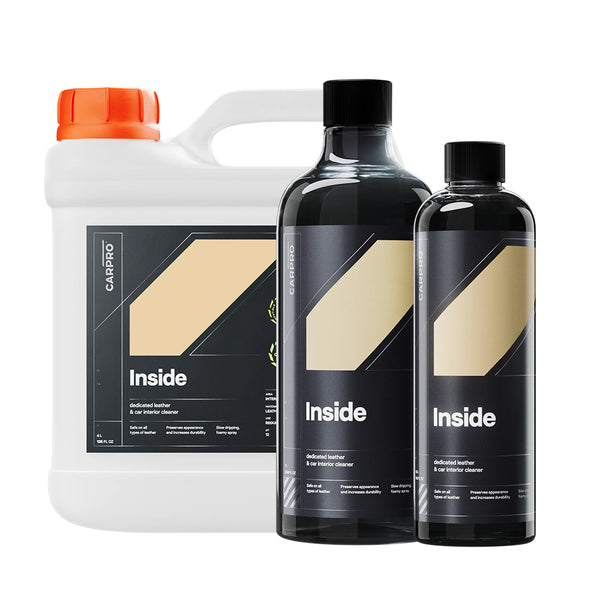 0% offMost Popular
 0% offOur Pick
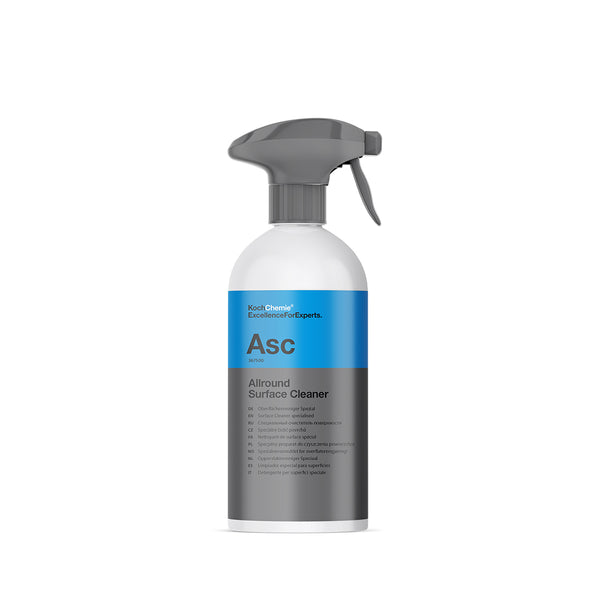
Koch-Chemie(ASC) Allround Surface Cleaner | Specialised Surface Cleaner
Rated 5.0 out of 5 stars
1 Review
From$24.55
 0% offPro's Choice
Koch-Chemie(MZR) Mehrzweckreiniger | Interior & Special Cleaner
Rated 5.0 out of 5 stars
5 Reviews
From$160.45
20 products
 0% off
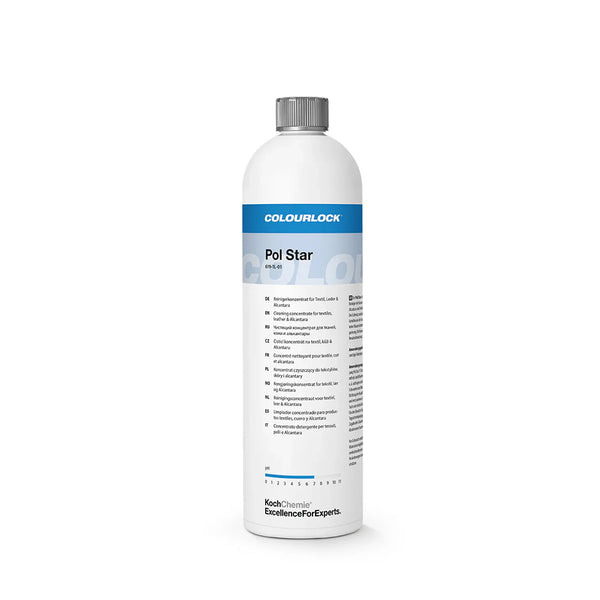
Koch-Chemie(PO) Pol Star | Textile, Leather and Alcantara Cleaner
Rated 5.0 out of 5 stars
15 Reviews
From$26.70
 0% off
Koch-Chemie(ASC) Allround Surface Cleaner | Specialised Surface Cleaner
Rated 5.0 out of 5 stars
1 Review
From$24.55
 0% off
Koch-Chemie(MZR) Mehrzweckreiniger | Interior & Special Cleaner
Rated 5.0 out of 5 stars
5 Reviews
From$160.45







Car Interior Cleaners
FAQ's: Interior Cleaners
How an interior cleaner differs from an all purpose cleaner, how to clean a dashboard without making it shiny, and which cleaner suits which surface. These are the questions we get asked the most.
Still unsure? Ask us ›What's the difference between an interior cleaner and an all purpose cleaner?
Strength and what they're safe on.
An all purpose cleaner is a concentrate built to be diluted hard for engine bays and wheel arches, and lighter for interiors. Used neat or at the wrong ratio on a dashboard, an APC can strip the finish off soft touch plastics, leave a chalky cast on vinyl and stain the foam behind perforated trim.
A dedicated interior cleaner is already at the right strength for the job and formulated not to leave residue or gloss behind. It's the safer default for anything you touch every day. Koch Chemie ASC sits in that camp, ready to go and safe across the cabin without any mixing.
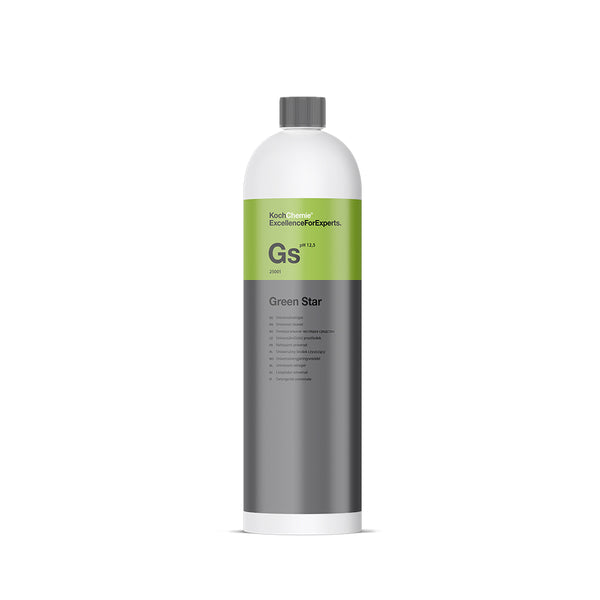
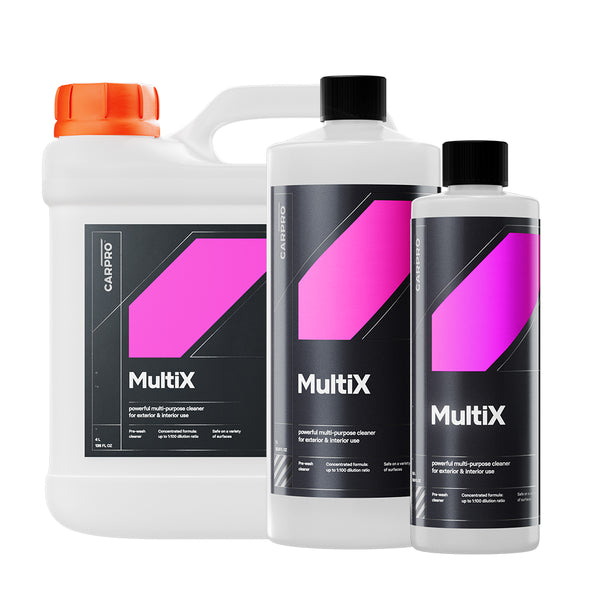
The concentrates are where the dilution matters. Green Star and CARPRO Multi X both do a fine job on a dirty interior when they're diluted right, and both will cause you problems if they aren't. Read the ratio rather than guessing it.
An all purpose cleaner is a concentrate built to be diluted hard for engine bays and wheel arches, and lighter for interiors. Used neat or at the wrong ratio on a dashboard, an APC can strip the finish off soft touch plastics, leave a chalky cast on vinyl and stain the foam behind perforated trim.
A dedicated interior cleaner is already at the right strength for the job and formulated not to leave residue or gloss behind. It's the safer default for anything you touch every day. Koch Chemie ASC sits in that camp, ready to go and safe across the cabin without any mixing.
The concentrates are where the dilution matters. Green Star and CARPRO Multi X both do a fine job on a dirty interior when they're diluted right, and both will cause you problems if they aren't. Read the ratio rather than guessing it.
How do I clean a dashboard without leaving it shiny?
Use a cleaner rather than a dressing, and keep the product off the dash.
Most of the shine people end up with comes from using a dressing or protectant when they only wanted the dust off. Those are designed to sit on the surface. A car dashboard cleaner lifts the dirt and leaves nothing behind, which is what gets you back to the factory matte finish.
Spray onto a microfibre cloth or a soft brush rather than onto the dashboard itself. Spraying direct puts product into vents, gauge clusters and switchgear, and overspray onto the inside of the windscreen is what causes that greasy film you can never quite clean off.
Work in sections, agitate the textured areas with a brush, then wipe with a clean cloth before it dries. If you do want some protection afterwards, a matte finish dressing is the one to use, not a gloss.
Most of the shine people end up with comes from using a dressing or protectant when they only wanted the dust off. Those are designed to sit on the surface. A car dashboard cleaner lifts the dirt and leaves nothing behind, which is what gets you back to the factory matte finish.
Spray onto a microfibre cloth or a soft brush rather than onto the dashboard itself. Spraying direct puts product into vents, gauge clusters and switchgear, and overspray onto the inside of the windscreen is what causes that greasy film you can never quite clean off.
Work in sections, agitate the textured areas with a brush, then wipe with a clean cloth before it dries. If you do want some protection afterwards, a matte finish dressing is the one to use, not a gloss.
Which cleaner should I use on which interior surface?
It comes down to how delicate the surface is.
Hard plastics and trim take the most. Door cards, centre consoles, lower dash and kick panels all handle a standard interior cleaner or a light APC dilution.
Soft touch plastics and coated surfaces want something gentler. The rubberised coating on a modern dash breaks down if you hit it with something too strong, and once it goes sticky it doesn't come back.
Screens and gloss black need the least. A damp microfibre cloth does most of it, and anything with solvents in it can haze an anti-glare coating permanently.
Headliners are the one to be careful with. They're fabric glued to foam, so anything that soaks through will lift the glue. Light mist onto the cloth, never onto the roof.
For leather, carpet and upholstery and glass, those have their own dedicated products and their own collections.
Hard plastics and trim take the most. Door cards, centre consoles, lower dash and kick panels all handle a standard interior cleaner or a light APC dilution.
Soft touch plastics and coated surfaces want something gentler. The rubberised coating on a modern dash breaks down if you hit it with something too strong, and once it goes sticky it doesn't come back.
Screens and gloss black need the least. A damp microfibre cloth does most of it, and anything with solvents in it can haze an anti-glare coating permanently.
Headliners are the one to be careful with. They're fabric glued to foam, so anything that soaks through will lift the glue. Light mist onto the cloth, never onto the roof.
For leather, carpet and upholstery and glass, those have their own dedicated products and their own collections.
Can I use one cleaner for the whole interior?
For most cars, yes, and it's how a lot of detailers work.
A versatile interior cleaner covers plastics, vinyl, trim and usually leather from one bottle, which saves swapping products every time you move across the cabin. CARPRO Inside and Koch Chemie Pol Star both do that, and Pol Star adds alcantara to the list, which is useful on seats that mix materials.
Where you'd still want something separate is glass, because an interior cleaner will streak on a windscreen, and heavily soiled carpet, which needs a product built to be extracted rather than wiped.
So one cleaner for the hard surfaces, a glass cleaner, and something for the fabric. Three products covers a full interior comfortably.
A versatile interior cleaner covers plastics, vinyl, trim and usually leather from one bottle, which saves swapping products every time you move across the cabin. CARPRO Inside and Koch Chemie Pol Star both do that, and Pol Star adds alcantara to the list, which is useful on seats that mix materials.
Where you'd still want something separate is glass, because an interior cleaner will streak on a windscreen, and heavily soiled carpet, which needs a product built to be extracted rather than wiped.
So one cleaner for the hard surfaces, a glass cleaner, and something for the fabric. Three products covers a full interior comfortably.