
Wool Pads
4.7from 116 reviews across this range
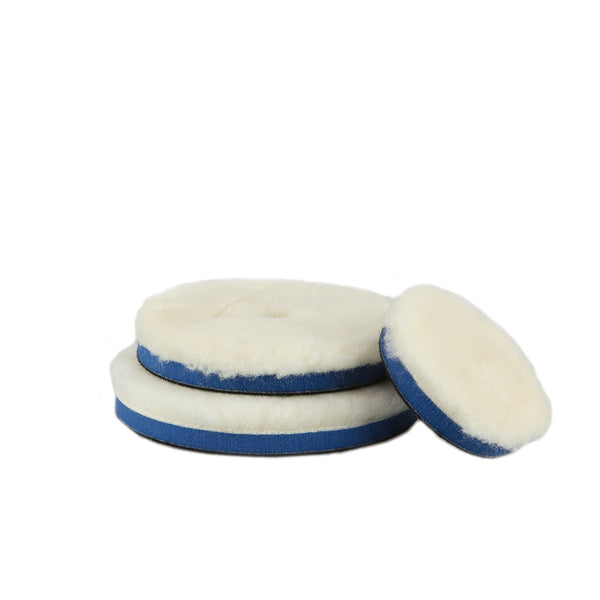
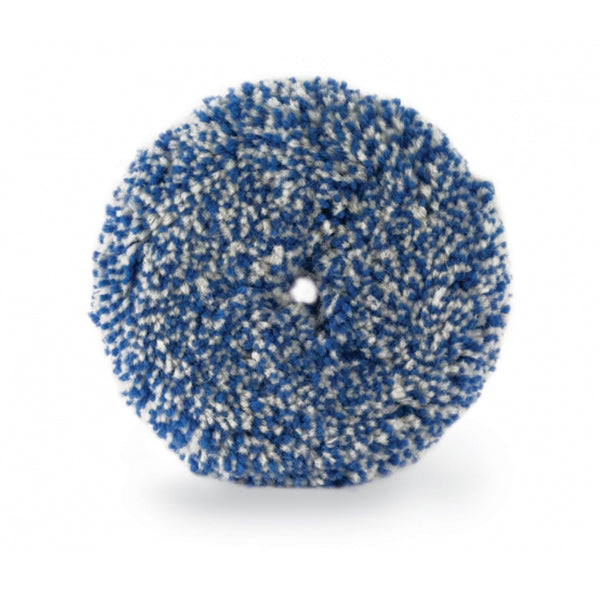
A wool polishing pad is for aggressive cutting, when you want the correction done quickly and reliably. Chalked paint, sanding marks, deep swirls on a hard clear and the first pass on a neglected car are all wool jobs, because the fibres carry more compound to the paint and cut harder per pass than any foam. Wool pads for buffing come in grades, from a twisted 4 ply that cuts like sandpaper to a low lint or foamed wool that finishes closer to a foam cutting pad, and most now suit a dual action as well as a rotary.
Featured items & kits
Hand picked for this category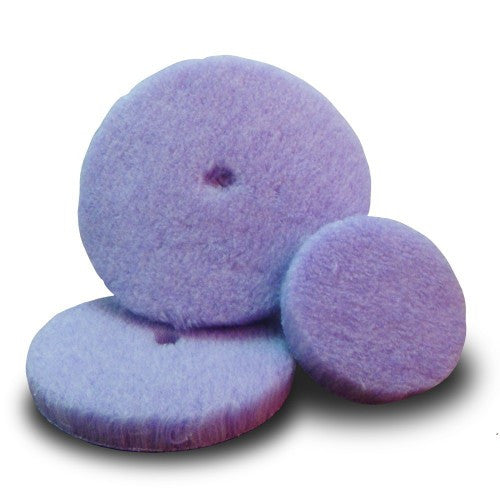






Wool Pads
FAQ's: Wool Pads
Rotary or DA, why wool over foam, and how to stop it shedding all over the car. These are the questions we get asked the most.
Still unsure? Ask us ›When should I use a wool pad instead of foam?
When you need aggressive cutting and you need it done quickly. Wool cuts faster than foam because the fibres hold more compound and press it into the paint harder than a foam cell can, so chalked or oxidised paint, sanding marks, deep swirls on a hard clear, and gelcoat on a boat all come back in fewer passes. On a big job, a wool pad and a heavy cut compound is the difference between a morning and a day.
Heat is the thing to understand. A wool pad runs cooler than foam and a lot cooler than a microfibre pad, because the fibres let heat out instead of trapping it, which is why wool is often the better step up on soft paint when you've run out of cut with foam. But wool is usually on a rotary, and a rotary makes its heat right at the panel rather than in the machine, so the surface still gets hot quickly and you'll see haze and holograms if the pad sits. Keep it moving, check the paint often, and plan on a foam pad and a finishing polish afterwards to clear what wool leaves behind. Wool is the first step, never the last one.
Heat is the thing to understand. A wool pad runs cooler than foam and a lot cooler than a microfibre pad, because the fibres let heat out instead of trapping it, which is why wool is often the better step up on soft paint when you've run out of cut with foam. But wool is usually on a rotary, and a rotary makes its heat right at the panel rather than in the machine, so the surface still gets hot quickly and you'll see haze and holograms if the pad sits. Keep it moving, check the paint often, and plan on a foam pad and a finishing polish afterwards to clear what wool leaves behind. Wool is the first step, never the last one.
Can I use a wool pad on a dual action polisher?
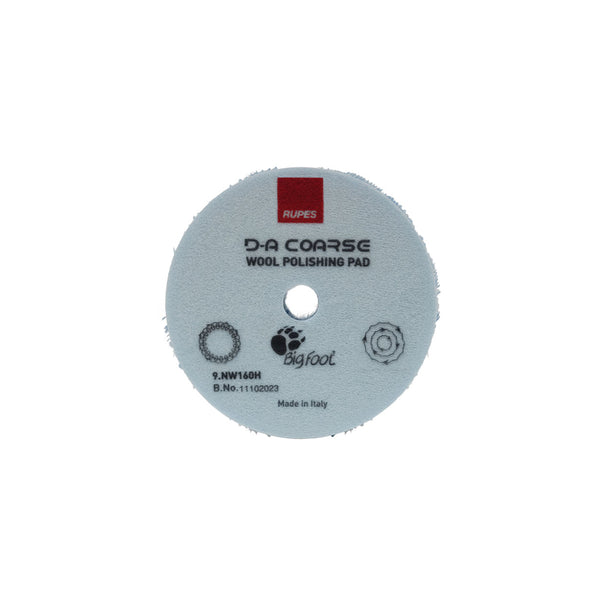
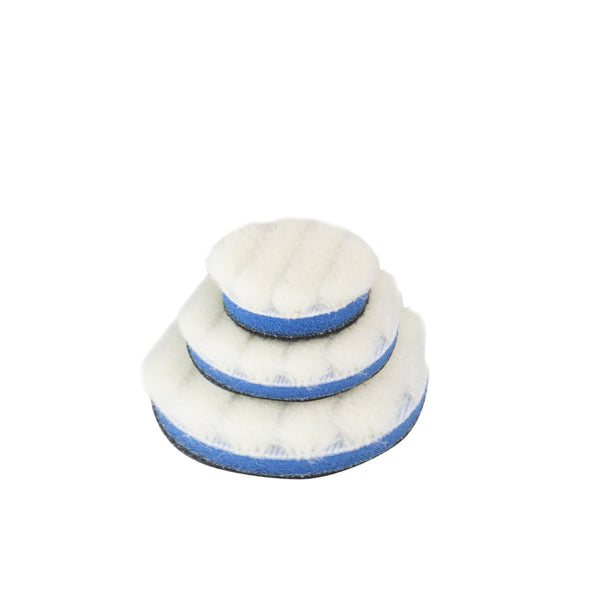
Yes, and most of the wool pads here are built for it. The older assumption that wool means rotary came from the twisted and 4 ply pads, which are heavy, shed lint and want the constant rotation of a rotary to work. The newer DA wool pads, the Rupes DA range, the ShineMate T130 and T140, and Lake Country's low lint and foamed wool, are lighter, shorter piled and balanced for an orbital so they cut without stalling the machine.
On a DA, use a wool pad with a heavy cut compound on a medium speed and let the pad do the work rather than leaning on it. If the machine keeps stalling, the pad is too heavy for it or you're pressing too hard. A long throw 15mm or 21mm DA gets the most out of wool.
On a DA, use a wool pad with a heavy cut compound on a medium speed and let the pad do the work rather than leaning on it. If the machine keeps stalling, the pad is too heavy for it or you're pressing too hard. A long throw 15mm or 21mm DA gets the most out of wool.
Which wool pad should I start with?
It comes down to how much cut you need and what machine you're running. The picks at the top of the page show what's popular and what the pros reach for, so start there. Broadly, a foamed wool like the Lake Country Purple sits between a foam cutting pad and a true wool, so it's the one to try if you've never used wool. A low lint pad gives full wool cut with far less mess and is what most detailers end up on. Twisted and 4 ply wool is the heaviest cut on the shelf and belongs on a rotary for paint that's been let go. And the short pile DA wool pads from Rupes and ShineMate are the current generation, built for orbital machines and easier to control.
Whatever you pick, get two, because a wool pad loads up faster than foam and you'll want to swap mid car.
Whatever you pick, get two, because a wool pad loads up faster than foam and you'll want to swap mid car.
How do I clean a wool pad and stop it shedding?
Spur it, and spur it often. Wool loads with spent compound faster than foam and the fibres mat down, so a pad brush or a pad tool run across the face between every panel opens the fibres back up and flicks the residue out. A blast from an air gun does it faster and cools the pad. That's also what controls the lint. A new wool pad sheds for the first few uses no matter what, and a matted one sheds constantly, so a clean pad is a low lint pad.
At the end of the day, wash it like foam, a soak in a pad cleaner or diluted all purpose cleaner, work the residue out, rinse until clear, and squeeze rather than wring. Dry it face up and away from anything that'll pick up the fibres. Brush the face again once it's dry so the next set starts with the pile standing.
At the end of the day, wash it like foam, a soak in a pad cleaner or diluted all purpose cleaner, work the residue out, rinse until clear, and squeeze rather than wring. Dry it face up and away from anything that'll pick up the fibres. Brush the face again once it's dry so the next set starts with the pile standing.