

Fabric Protectant
4.8from 27 reviews across this range
A car fabric protector puts an invisible barrier into cloth seats, carpets and mats so coffee, rain and muddy boots bead on the surface instead of soaking in and staining. The current generation of fabric protectants use SiO2 and nano particles that bond to the individual fibres rather than sitting on top, so the fabric stays soft and breathable and the protection lasts months rather than weeks.
Featured items & kits
Hand picked for this category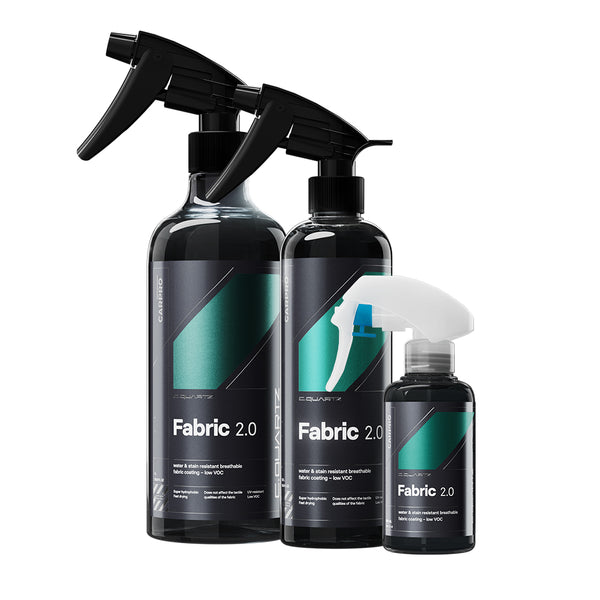 0% offMost Popular
CarproC.QUARTZ Fabric 2.0 | Water & Stain Resistant Coating
Rated 4.7 out of 5 stars
12 Reviews
From$29.95

5 products
0% offCarproC.QUARTZ Fabric 2.0 | Water & Stain Resistant Coating
Rated 4.7 out of 5 stars
12 Reviews
From$29.95
In action
Fabric Protectant, in action
 FeaturedCARPRO C.QUARTZ Fabric 2.0
From $29.95Shop ›
Fabric Protectant
FAQ's: Fabric Protectant
What's actually in the bottle, how to put it on, and what it will and won't protect. These are the questions we get asked the most.
Still unsure? Ask us ›How does a car fabric protector actually work?
Traditional fabric guards put a fluoropolymer barrier over the weave that repels water and stains, and they still work well. Products like 303 Fabric Guard are that technology and are the quickest way to protect a set of seats. The newer ceramic style protectants take it further. They use SiO2 based nano particles small enough to attach to each fibre individually, so the barrier is in the fabric rather than on it, the seat stays soft and breathable, and the protection lasts a lot longer between applications.
Either way, the practical difference is that a protected seat wipes clean with a damp cloth where an unprotected one needs a proper upholstery cleaner, and a spill you catch in the first minute usually leaves no trace at all.
Either way, the practical difference is that a protected seat wipes clean with a damp cloth where an unprotected one needs a proper upholstery cleaner, and a spill you catch in the first minute usually leaves no trace at all.
How do I apply a fabric protectant?
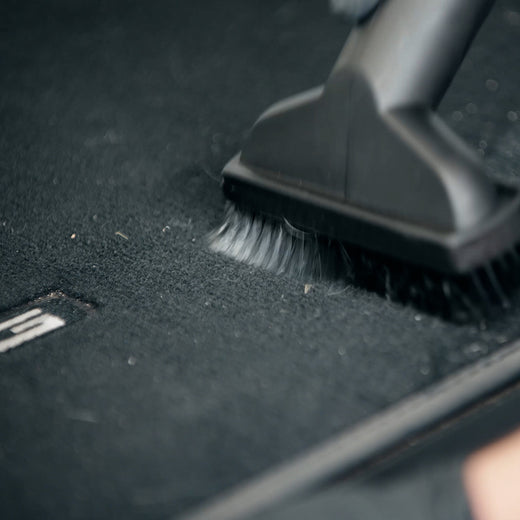
Clean first. The fabric has to be clean, dry and free of any dressing or old protectant, or the coating bonds to the dirt instead of the fibre. Vacuum, clean with an interior cleaner or carpet cleaner if it needs it, and let it dry fully.
Then shake the bottle and mist the product on lightly and evenly, working in a crosshatch pattern so nothing is missed. Don't soak it. Level it into the fabric with a suede or foam applicator, something that spreads rather than absorbs, so the coverage is even and there are no heavy patches. Leave it to cure with no water contact and the windows cracked for ventilation, anywhere from a few hours to overnight depending on the product, so check the label. High traffic areas like the driver's seat bolster and the boot liner take a second coat well.
Then shake the bottle and mist the product on lightly and evenly, working in a crosshatch pattern so nothing is missed. Don't soak it. Level it into the fabric with a suede or foam applicator, something that spreads rather than absorbs, so the coverage is even and there are no heavy patches. Leave it to cure with no water contact and the windows cracked for ventilation, anywhere from a few hours to overnight depending on the product, so check the label. High traffic areas like the driver's seat bolster and the boot liner take a second coat well.
What can I use it on, and what should I avoid?
Cloth seats, carpets, floor mats, boot liners, headliners, seatbelts, Alcantara and convertible soft tops are all fine, and that covers nearly every soft surface in a car. Where you want to be careful is anything with a coating already on it. Leather needs a leather protectant, not a fabric one, and vinyl needs a dressing. Suede-look microfibre fabrics can darken slightly, so test in a hidden spot first.
Light coloured fabrics are the ones worth doing most. A cream cloth seat with a fabric protectant on it will shrug off a dark denim dye transfer that would otherwise be permanent.
Light coloured fabrics are the ones worth doing most. A cream cloth seat with a fabric protectant on it will shrug off a dark denim dye transfer that would otherwise be permanent.
How long does fabric protection last, and which one should I start with?
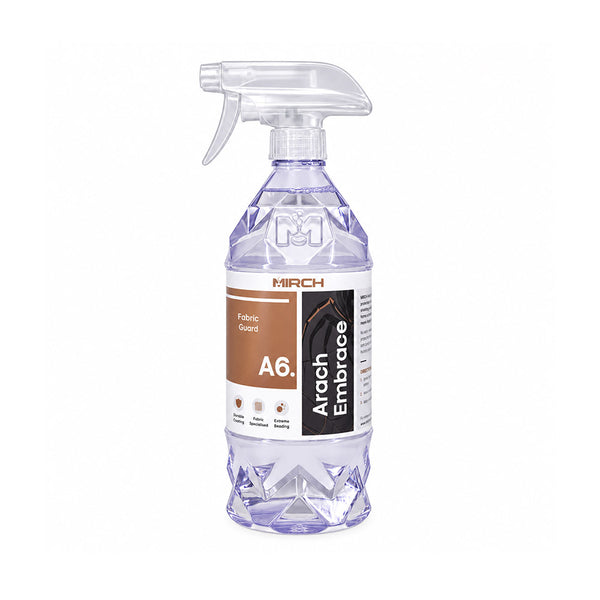
Ceramic style fabric coatings such as C.QUARTZ Fabric 2.0 and Arach Embrace last up to twelve months, so on a daily driver you're looking at doing it once a year, or when water stops beading on the seat. Spray protectants such as 303 Fabric Guard are quicker to apply and cheaper per bottle, but expect to reapply every few months, more if the fabric gets regular cleaning.
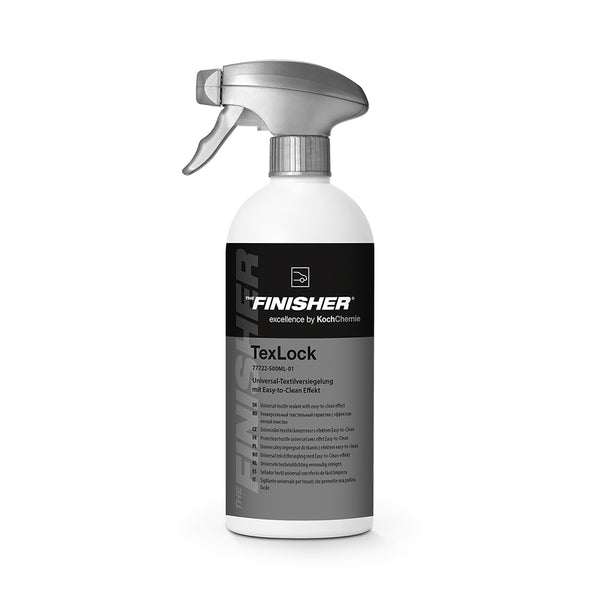
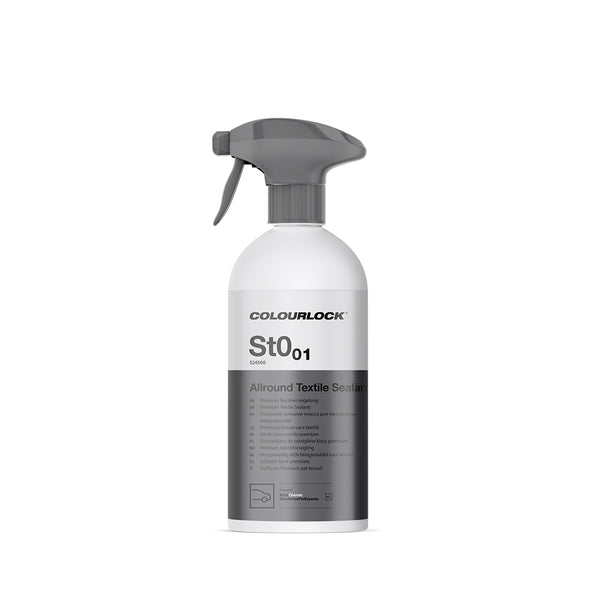
The picks at the top of the page show what's popular and what we reach for. Broadly, if you want to do it once and forget about it, one of the coatings. If you'd rather a quick top up after each interior clean, the spray. Textile sealants such as the Koch Chemie range sit between the two.
The picks at the top of the page show what's popular and what we reach for. Broadly, if you want to do it once and forget about it, one of the coatings. If you'd rather a quick top up after each interior clean, the spray. Textile sealants such as the Koch Chemie range sit between the two.